PHYSICAL ACTIVITY

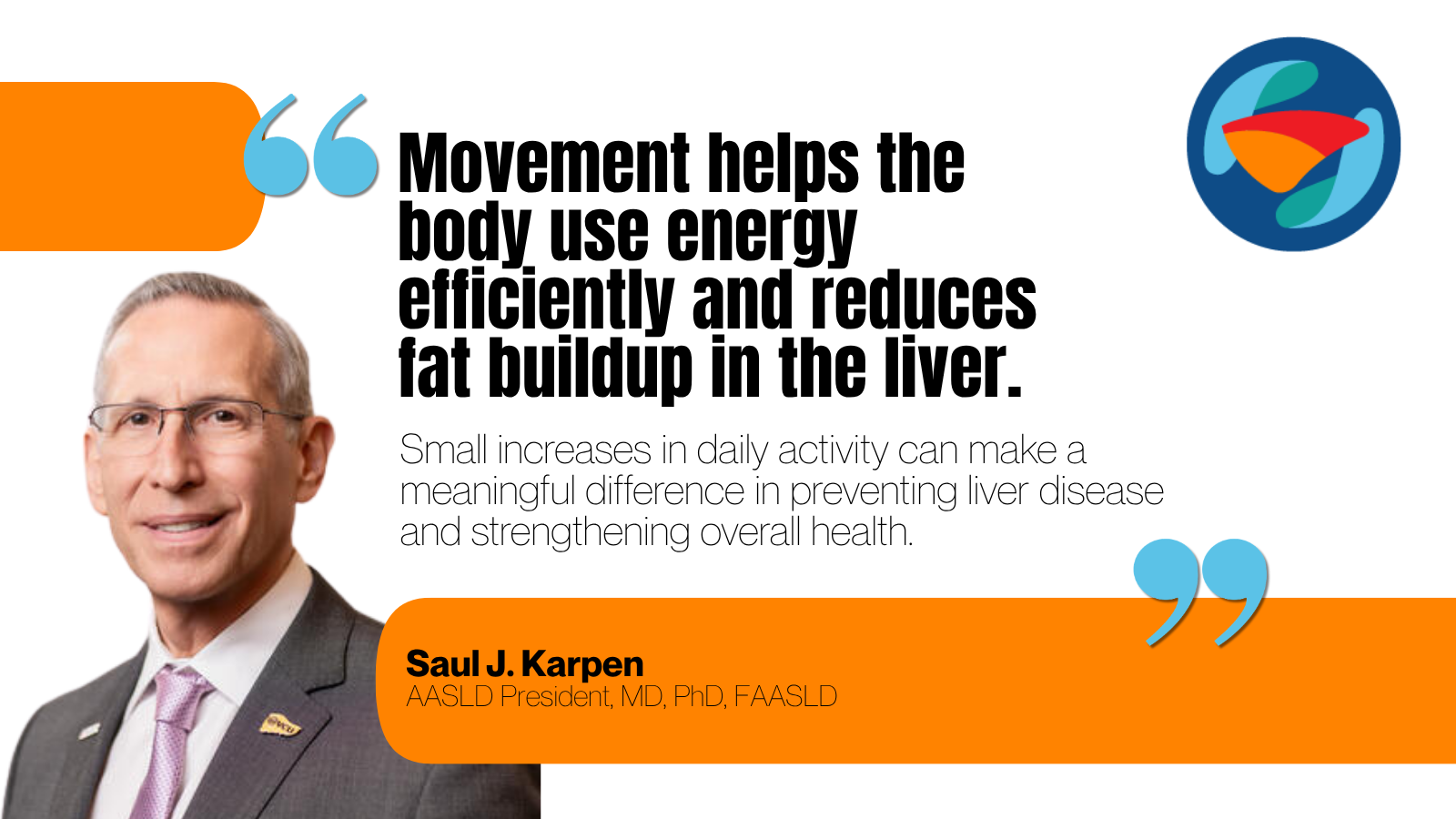
Being physically active helps protect your liver by reducing fat build-up, improving blood flow, and supporting healthy metabolism.

Move your body!

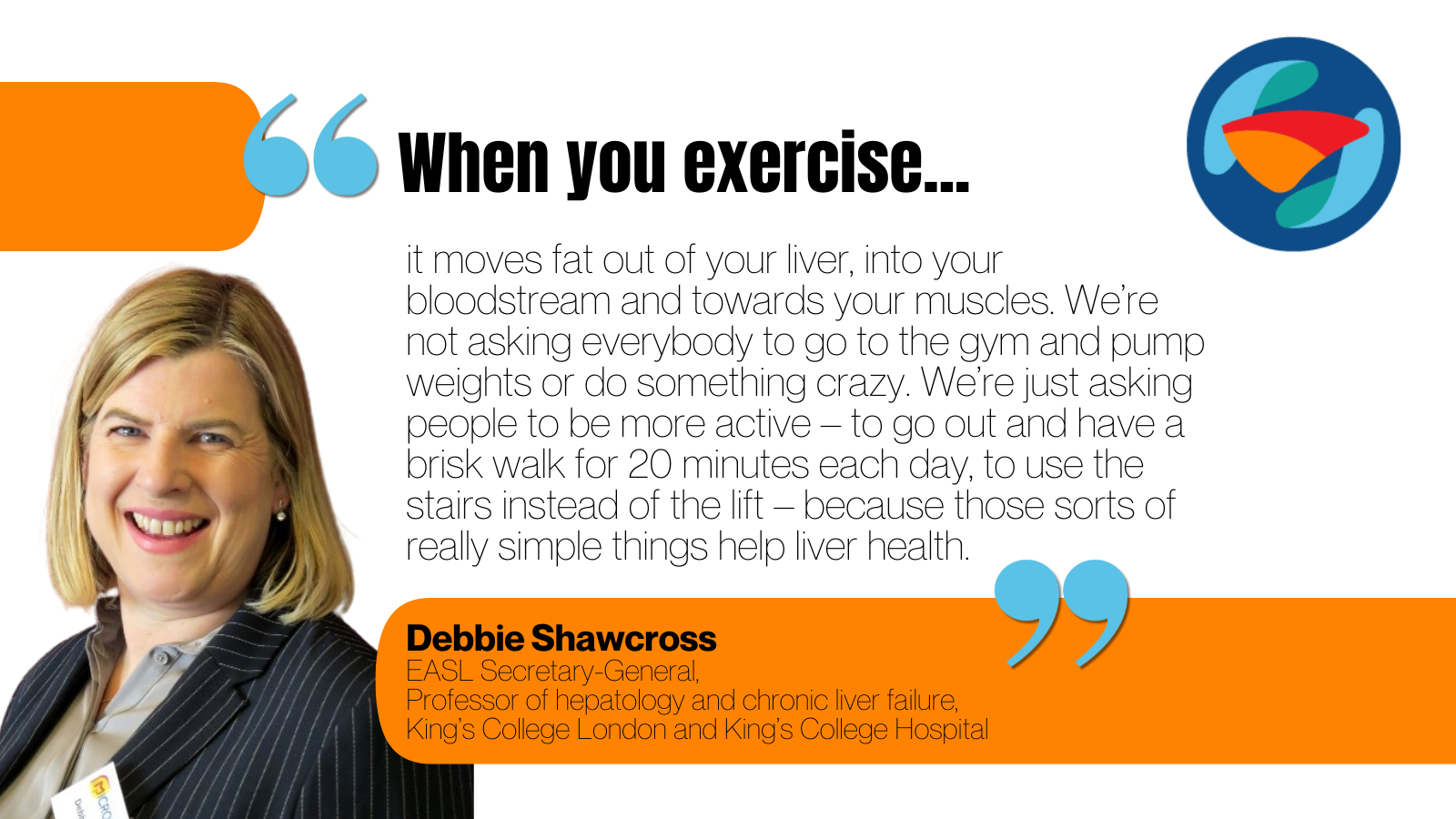
Being active protects your liver, even if you don’t lose any weight. Regular physical activity reduces liver fat, improves liver function, reduces the risk of developing heart disease and diabetes, boosts energy and lifts your mood.

For people with MASLD, staying active can also lower the risk of developing liver scarring, cirrhosis and liver cancer. Combine physical activity with even a modest weight loss of 7-10%, and the benefits are even greater.

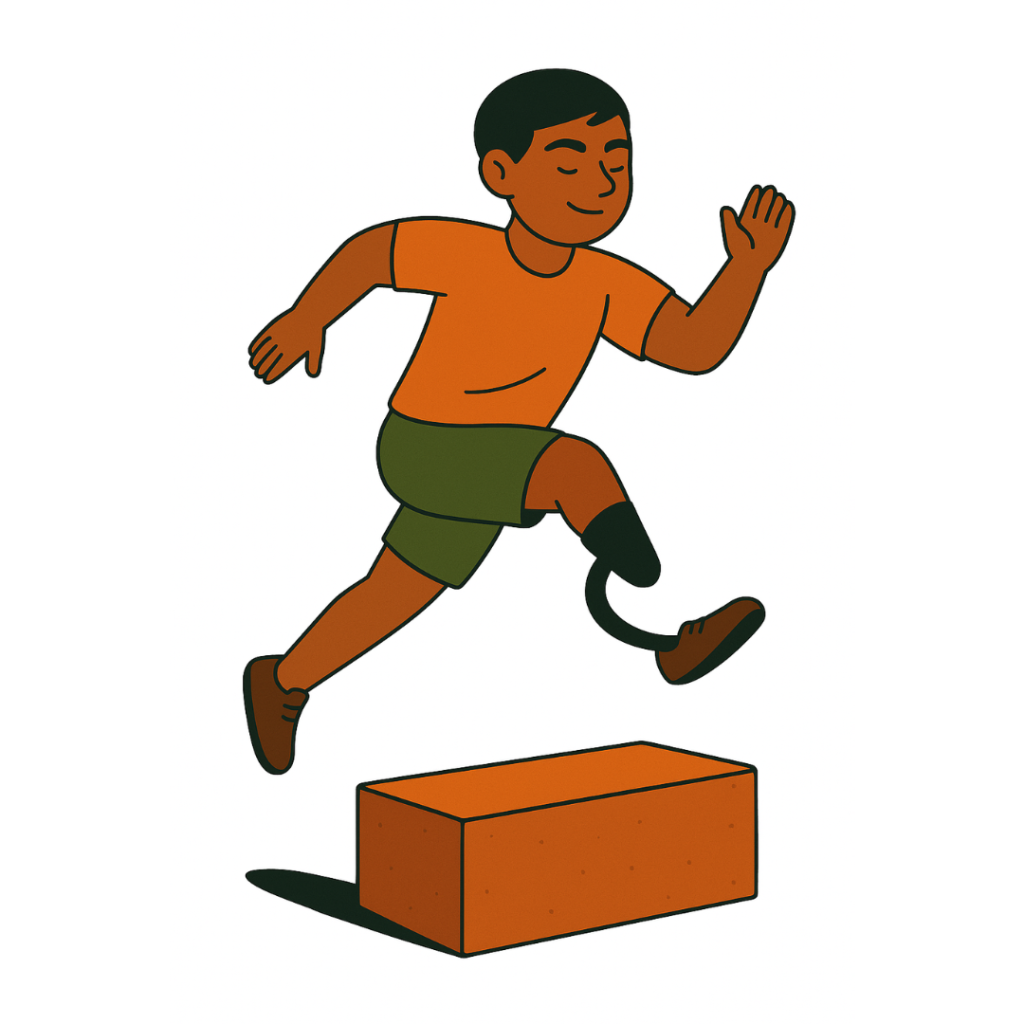
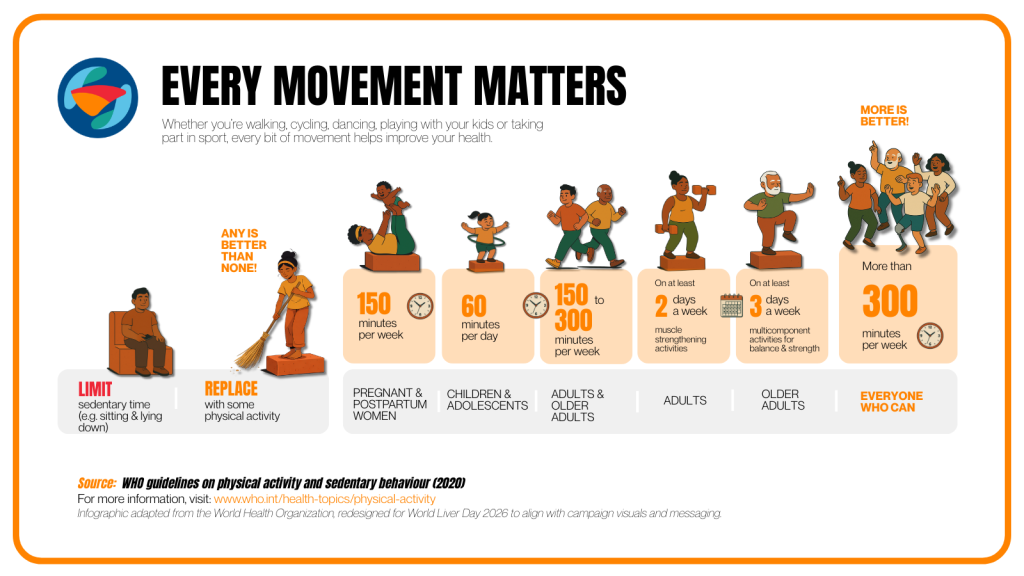
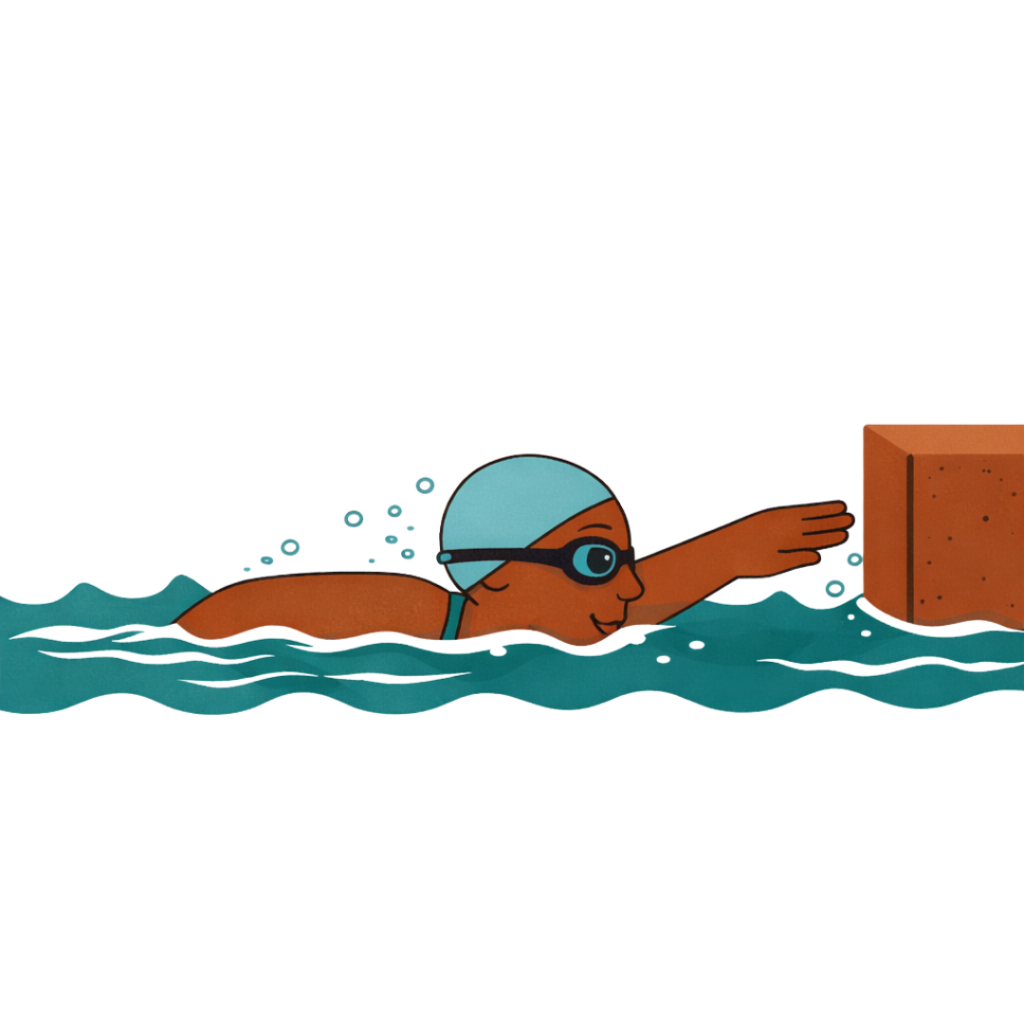
Aim for 150 minutes of moderate intensity physical activity each week (like brisk walking, cycling or swimming) or 75 minutes of vigorous intensity activity (like running or playing football). Add some resistance training to improve your muscle bulk and strength.

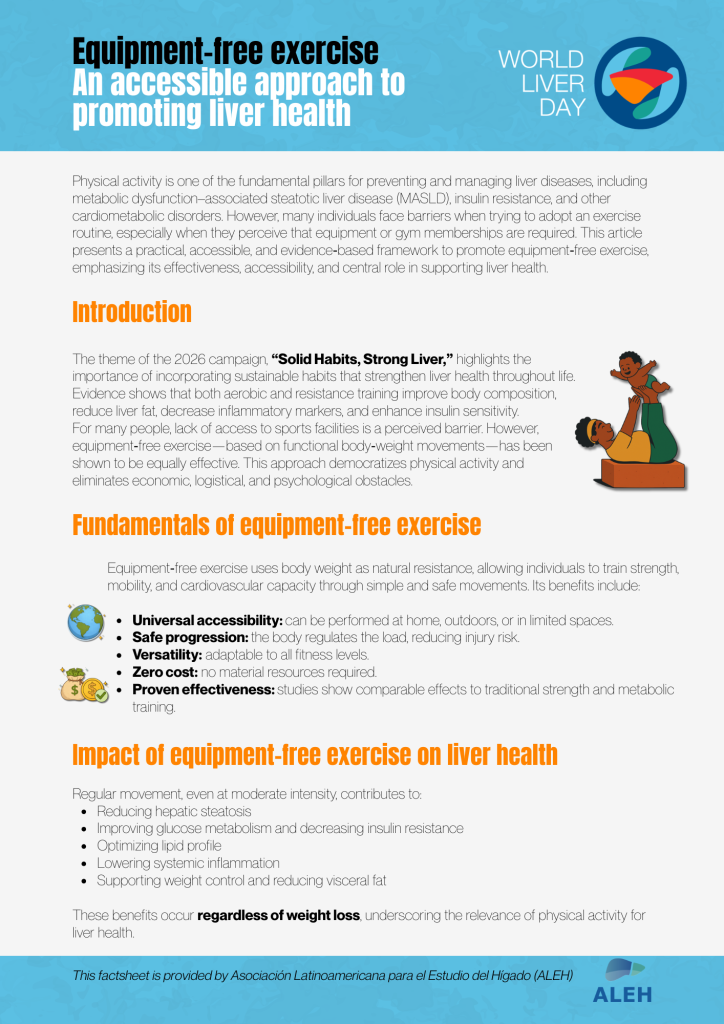
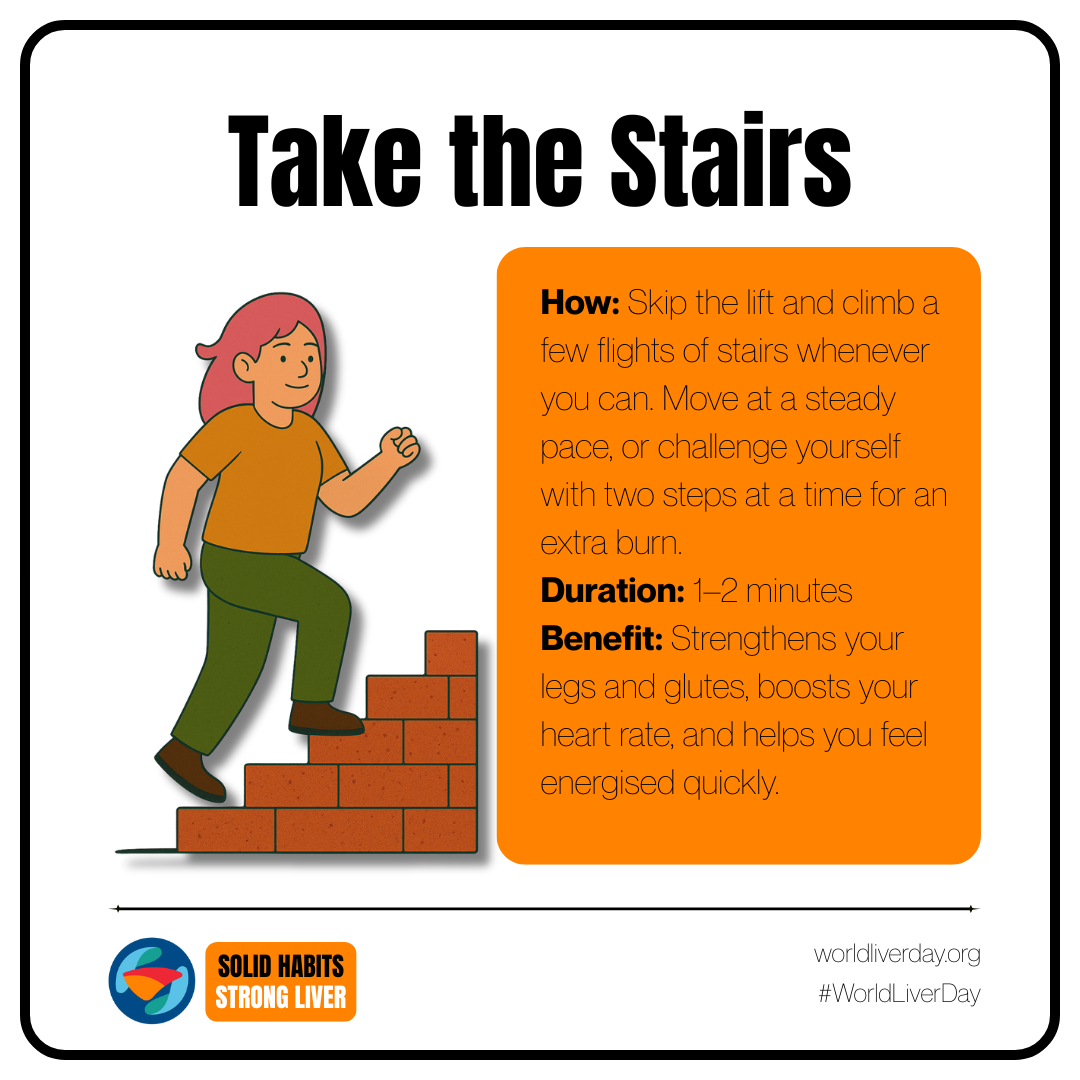
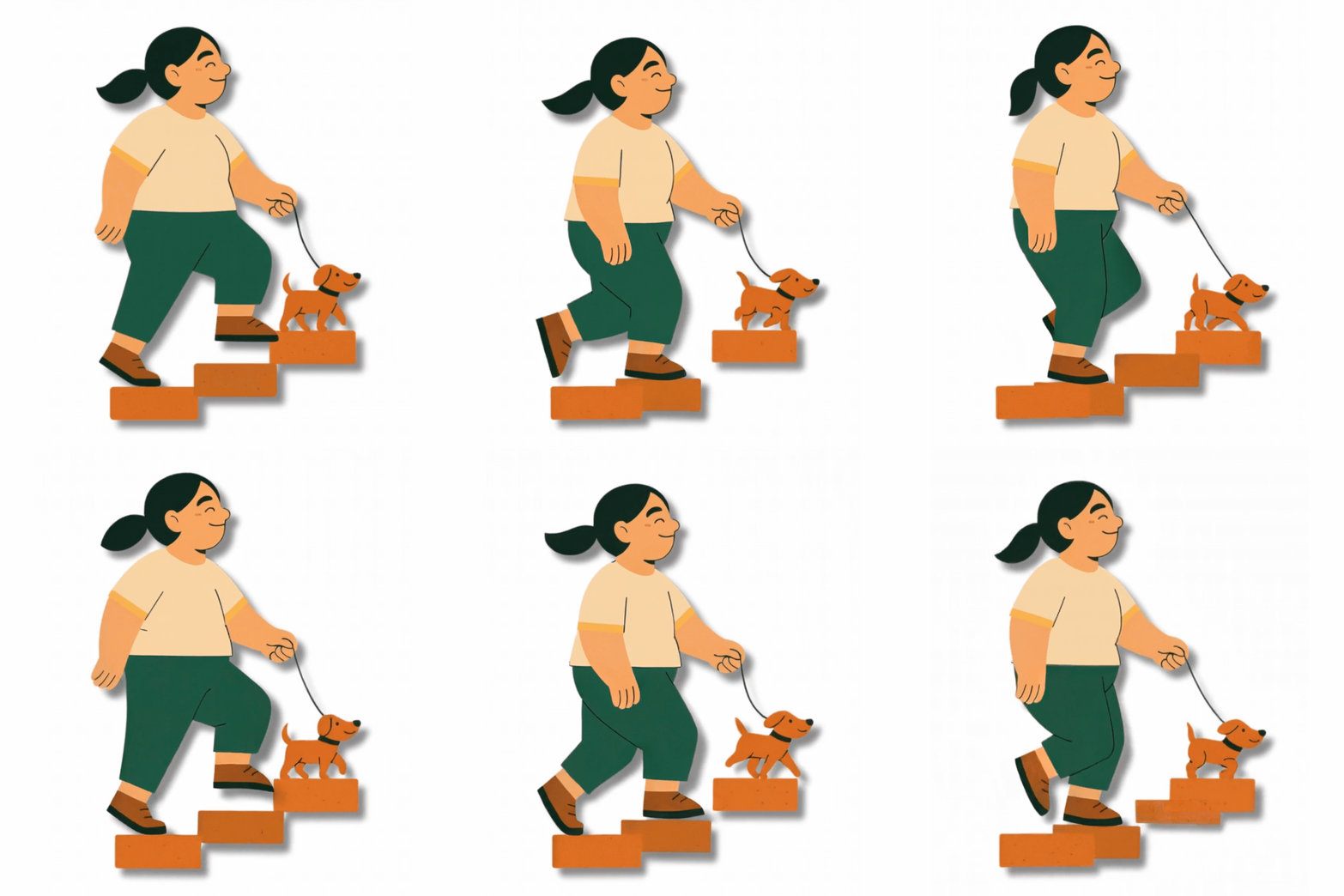
Even short sessions count: every movement matters. Walk after meals, take the stairs, or stand while on phone calls.
Small changes today mean a healthier liver in the future.
31% of adults and 80% of adolescents do not meet the recommended levels of physical activity.

Many factors influence how active people are and the overall levels of physical activity across different groups. This may stem from individual circumstances or broader social, cultural, environmental and economic conditions that shape peoples’ access to, and opportunities for, safe and enjoyable physical activity.

The WHO Global Action Plan on Physical Activity provides a framework to help countries promote active lifestyles through coordinated efforts across health, transport, urban design and community sectors, supporting the broader goals of the UN Sustainable Development Agenda 2030.

Types of physical activity.

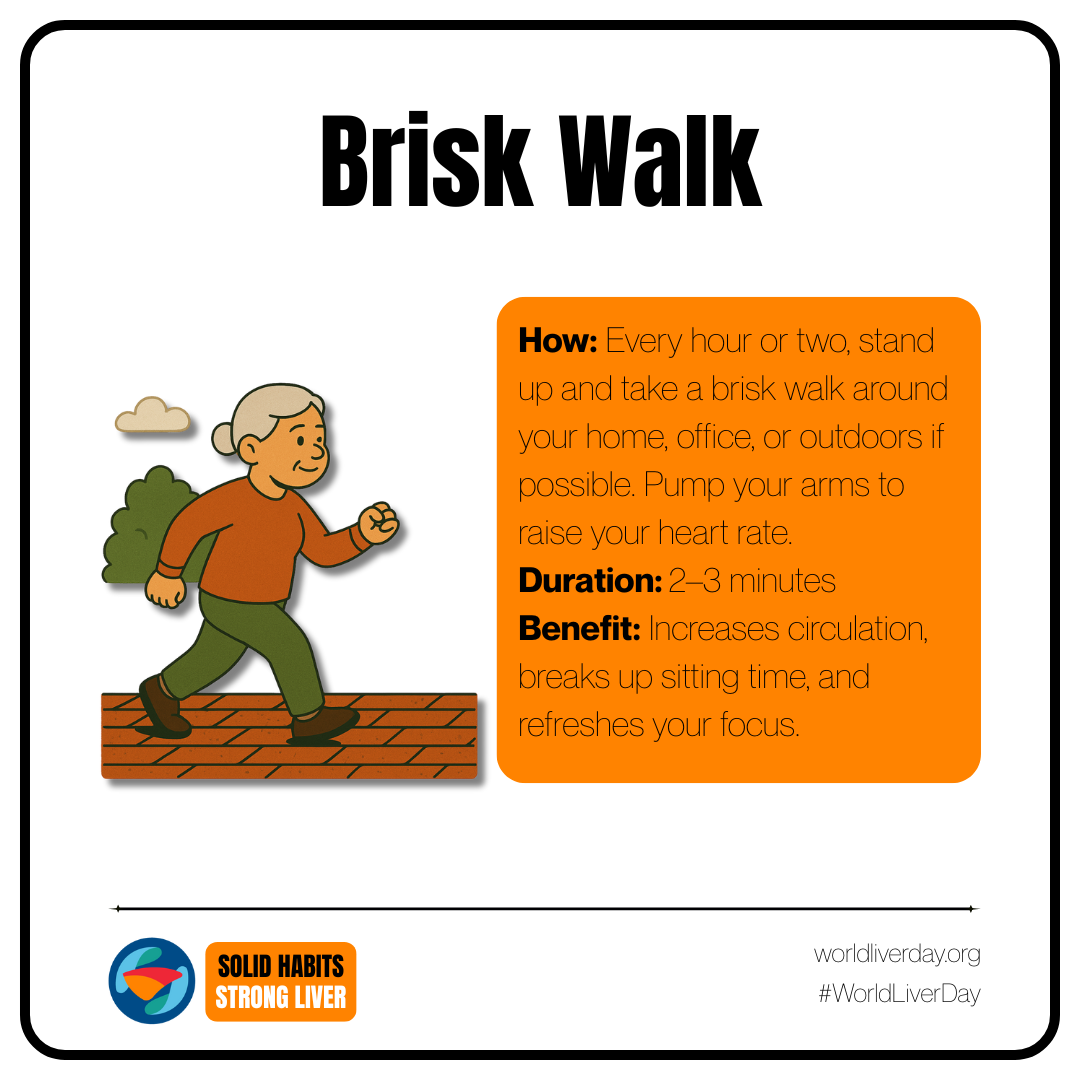
Aerobic (cardio) activity reduces liver fat and boosts heart health. Try brisk walking, cycling, swimming or jogging for 30–45 minutes, four to five times a week.

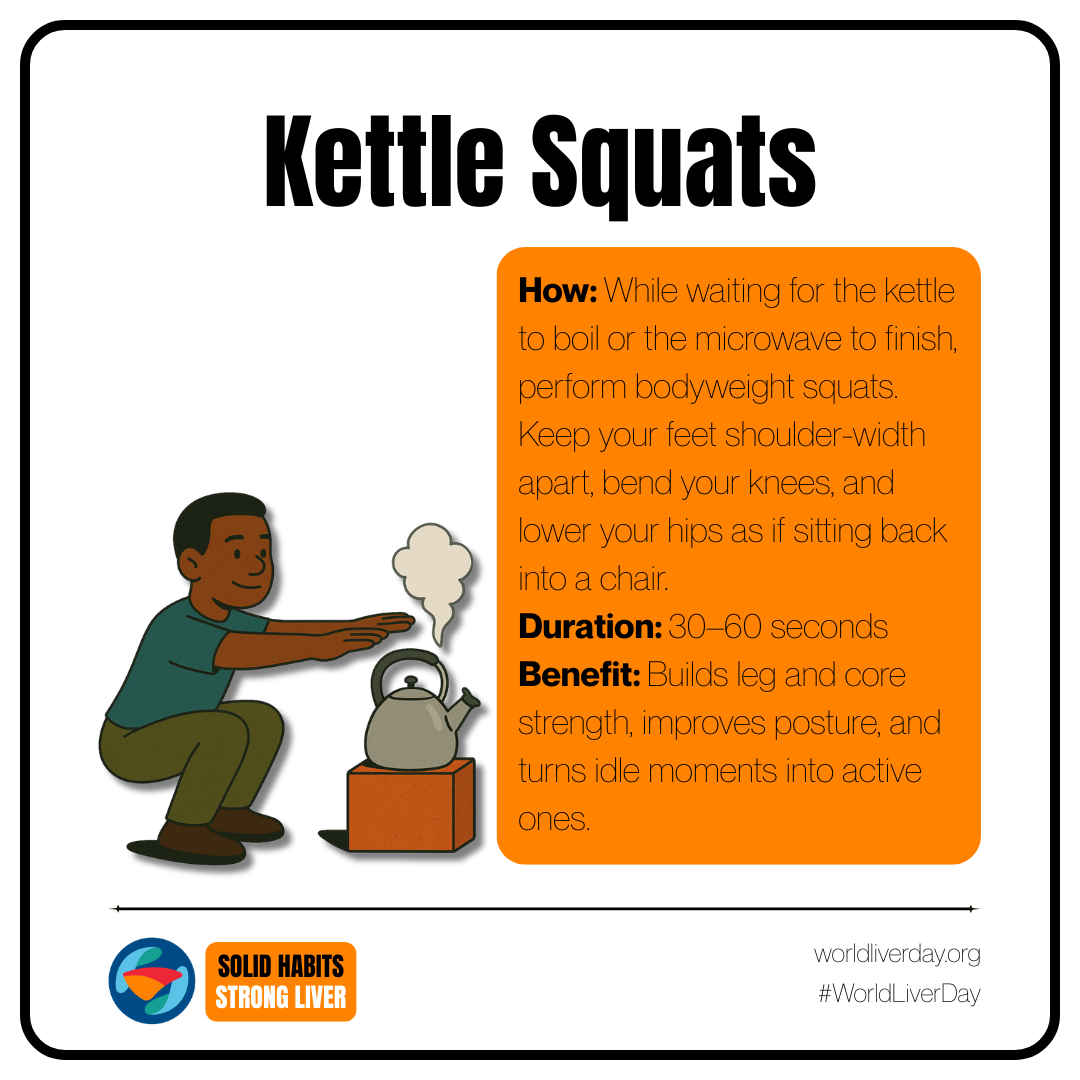
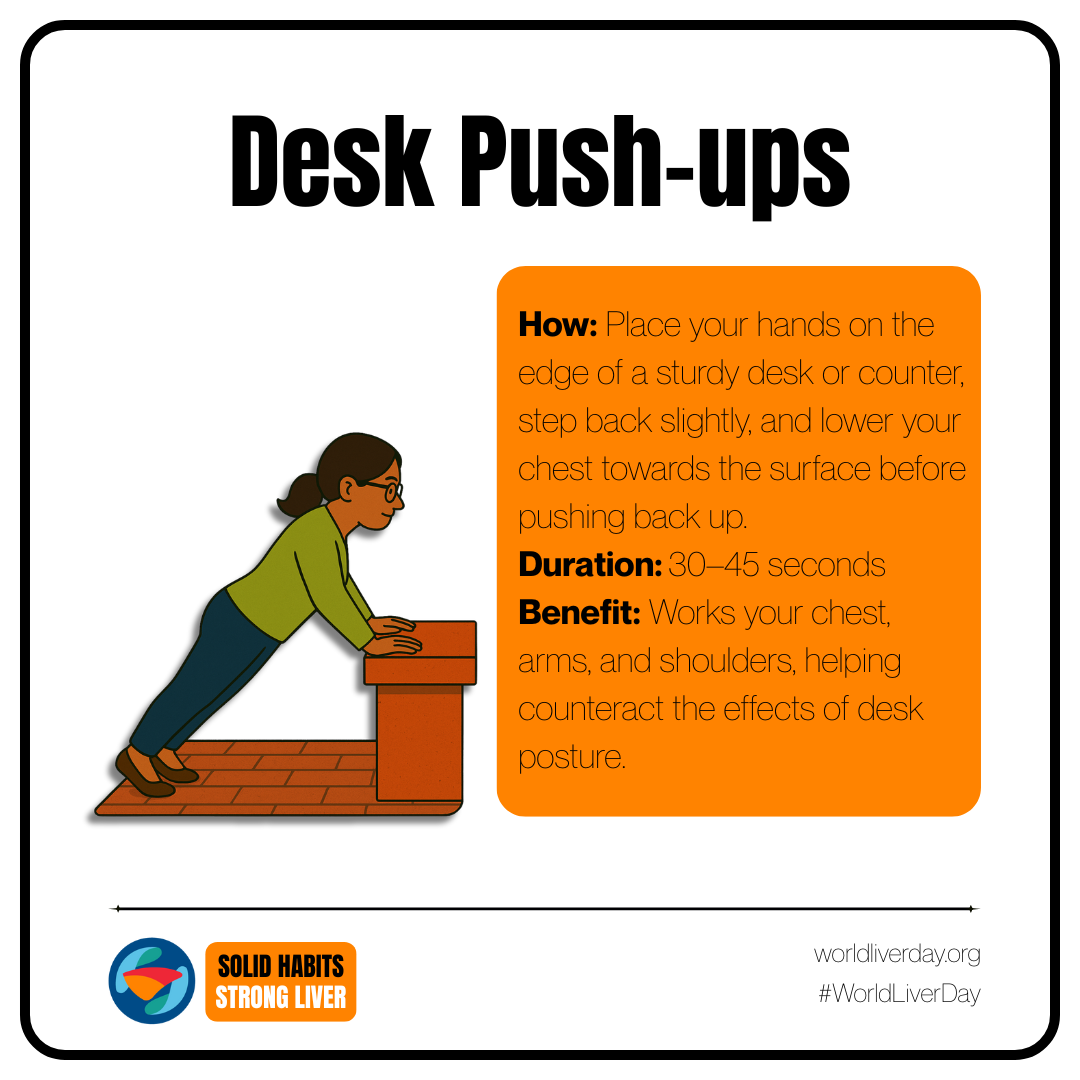
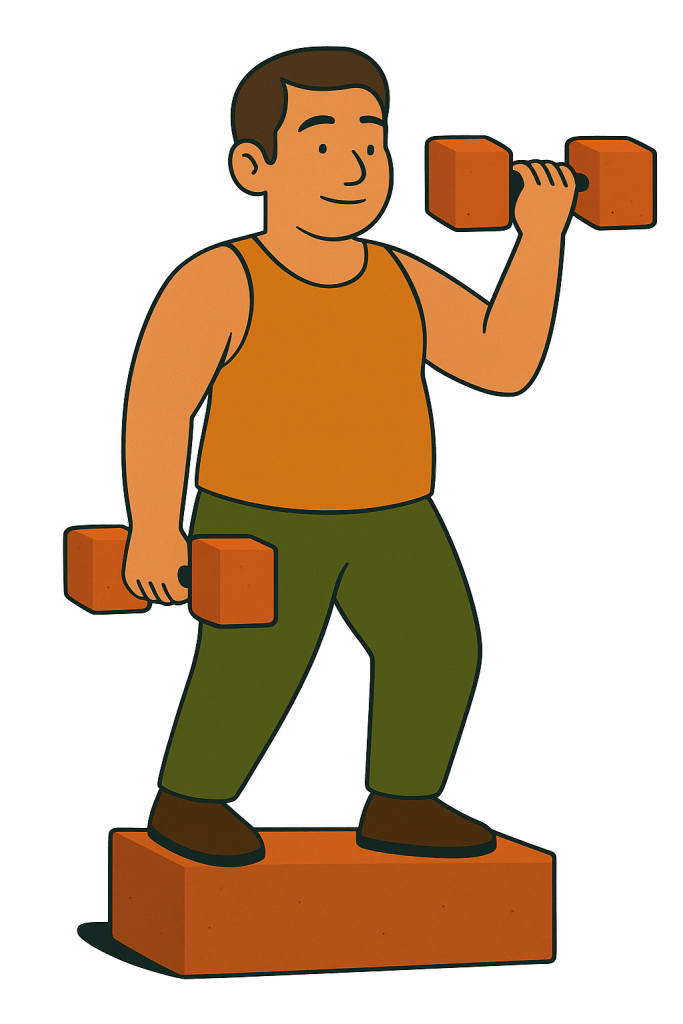
Strength (resistance) training builds muscle and improves insulin sensitivity, helping your body burn fat more efficiently. Include lifting weights, resistance bands or bodyweight exercises like squats and push-ups two to three times a week.

High-intensity interval training (HIIT) combines short bursts of vigorous activity with rest to improve fitness and burn fat. Even 15–20 minutes of sprints or circuit-style workouts can make a difference to your liver health and overall fitness.

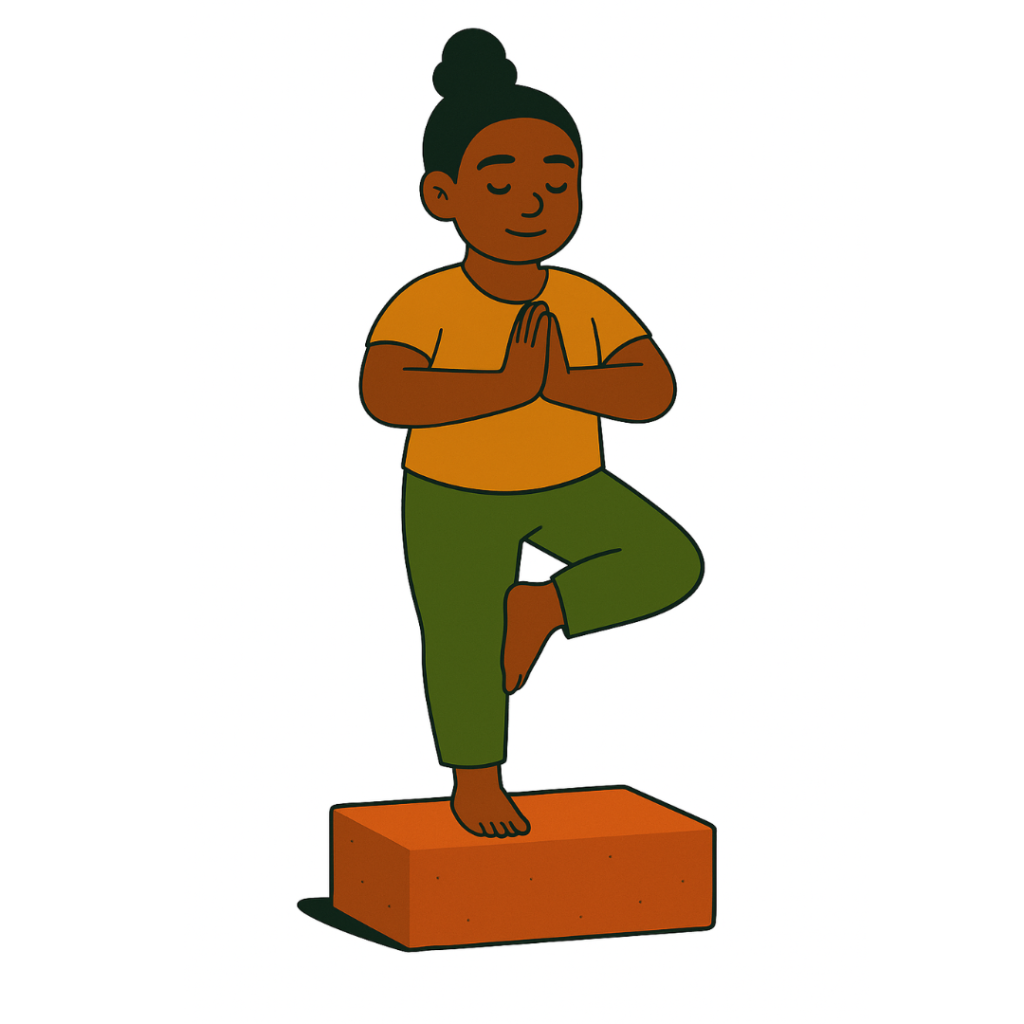
Yoga and stretching reduce stress and improve circulation. Poses like twists, downward dog and child’s pose help digestion, boost blood flow and promote relaxation, all of which improve overall health.

How much physical activity is right for me?

Any physical activity is better than none. Don’t worry if you can’t do the full amount right away! Start small and gradually increase your activity over time.

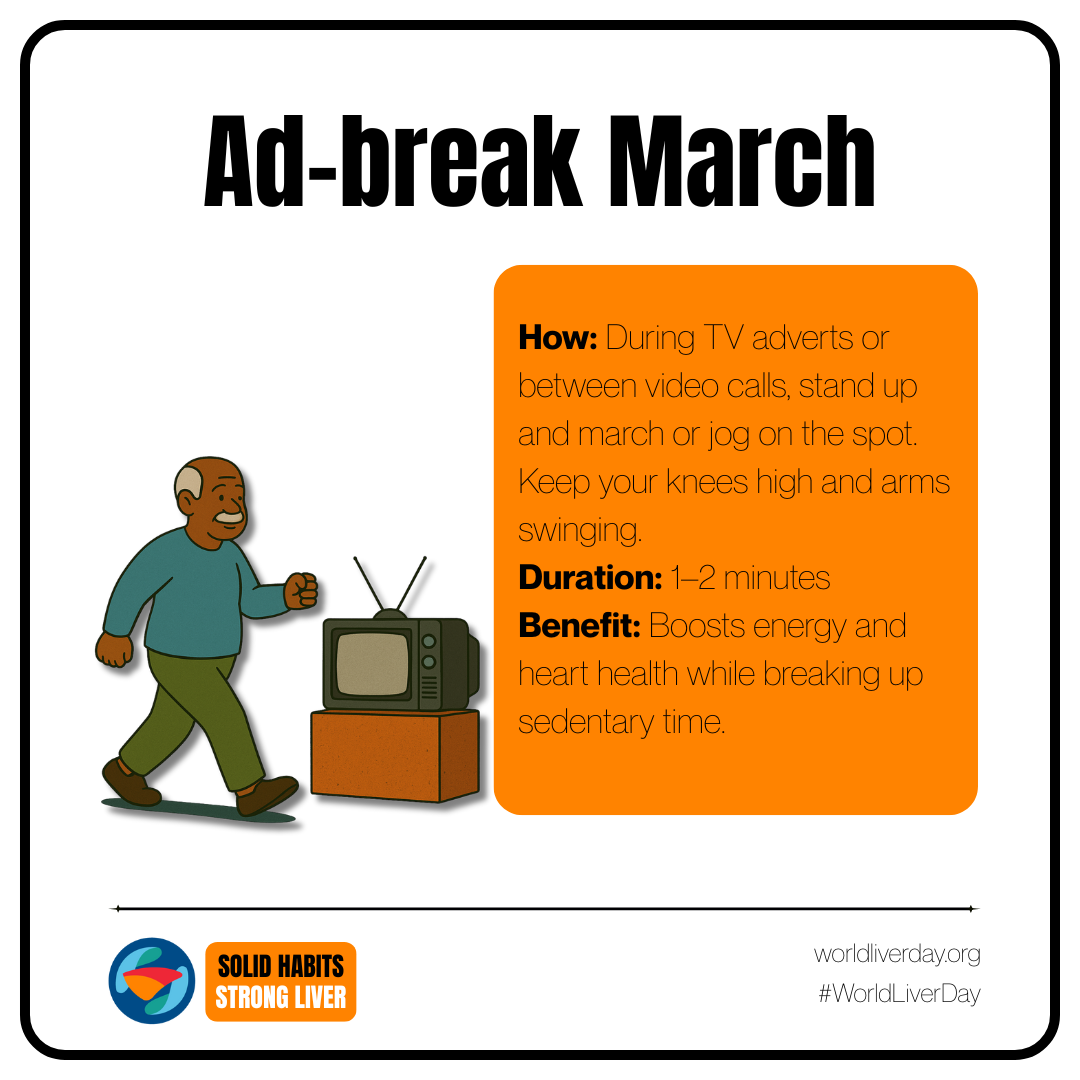
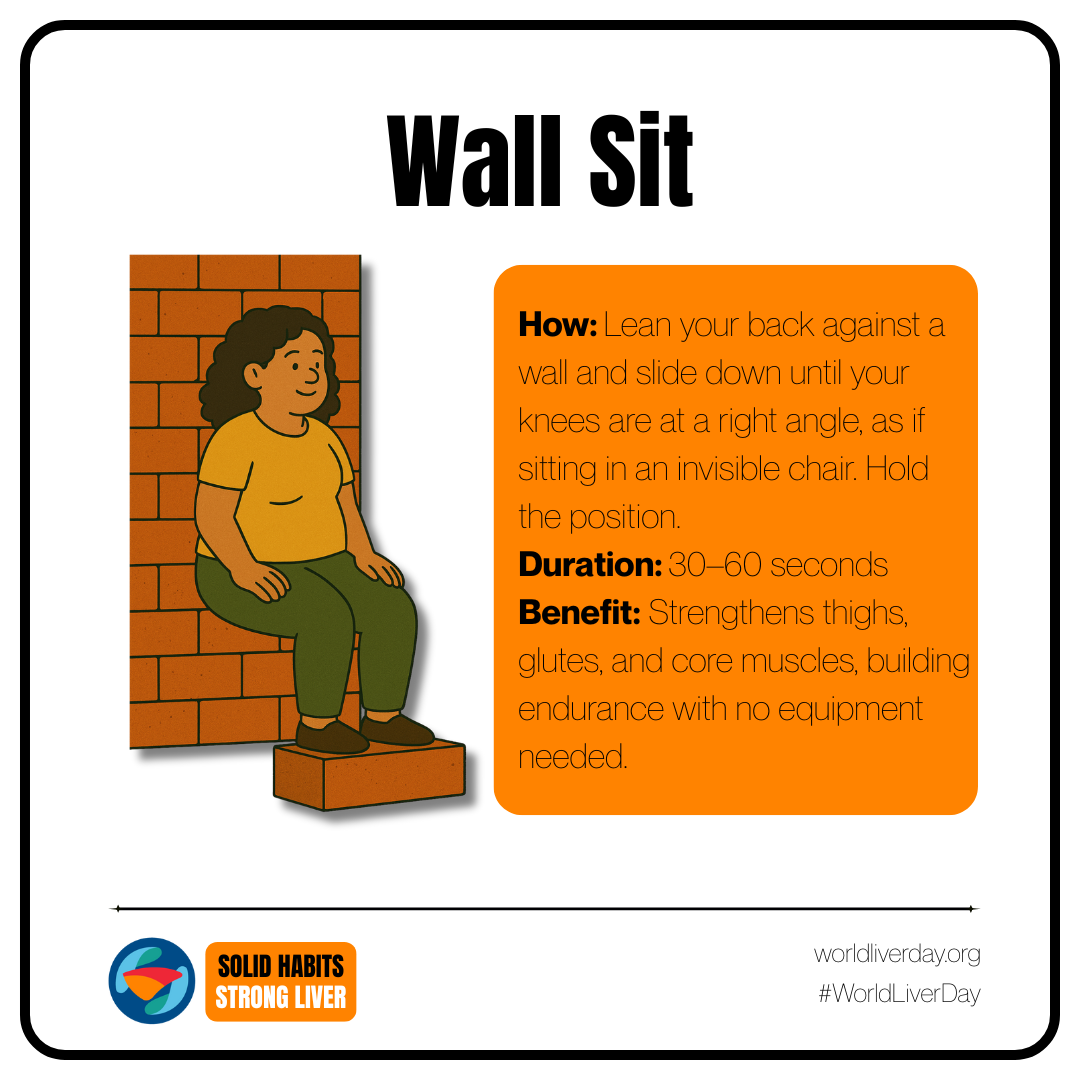
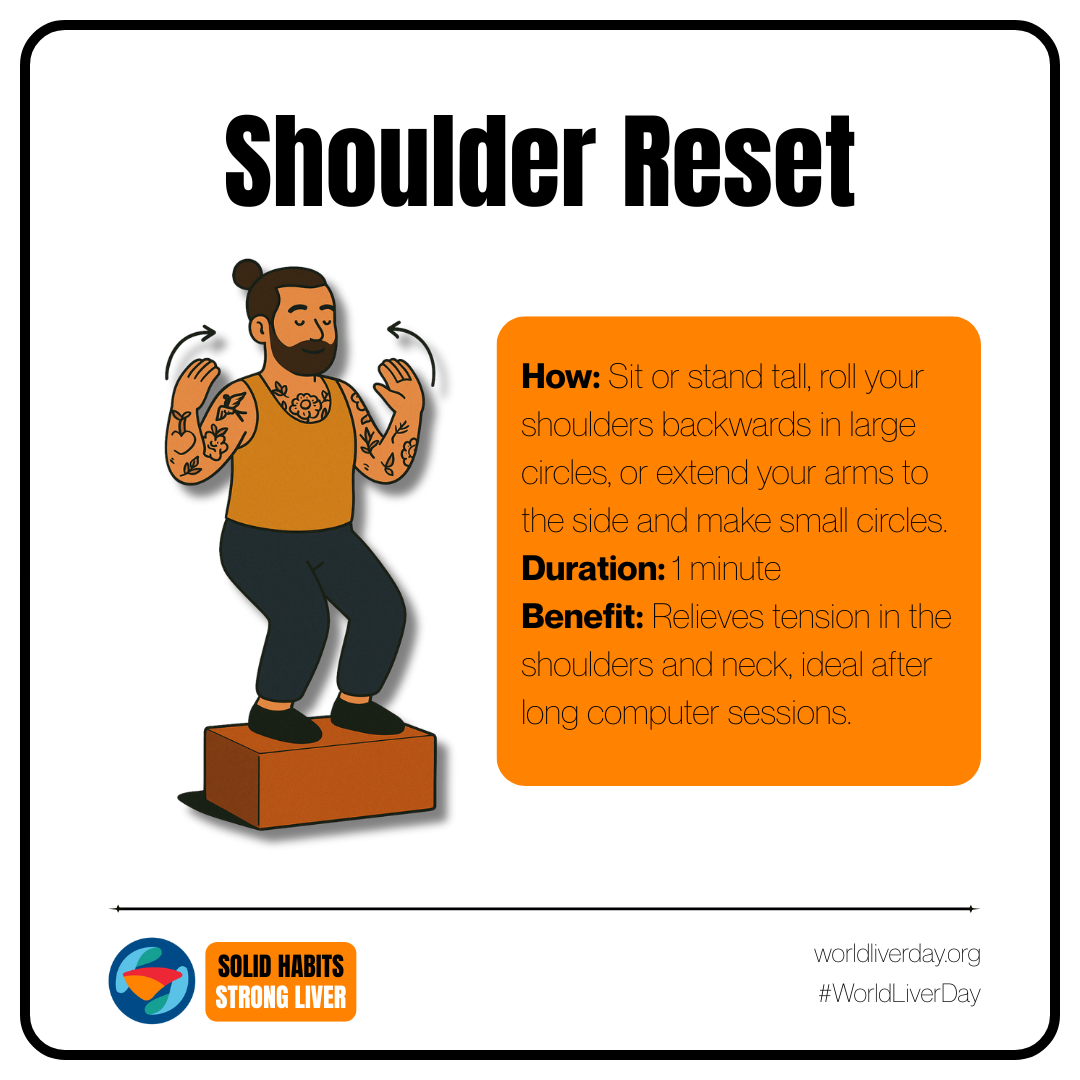
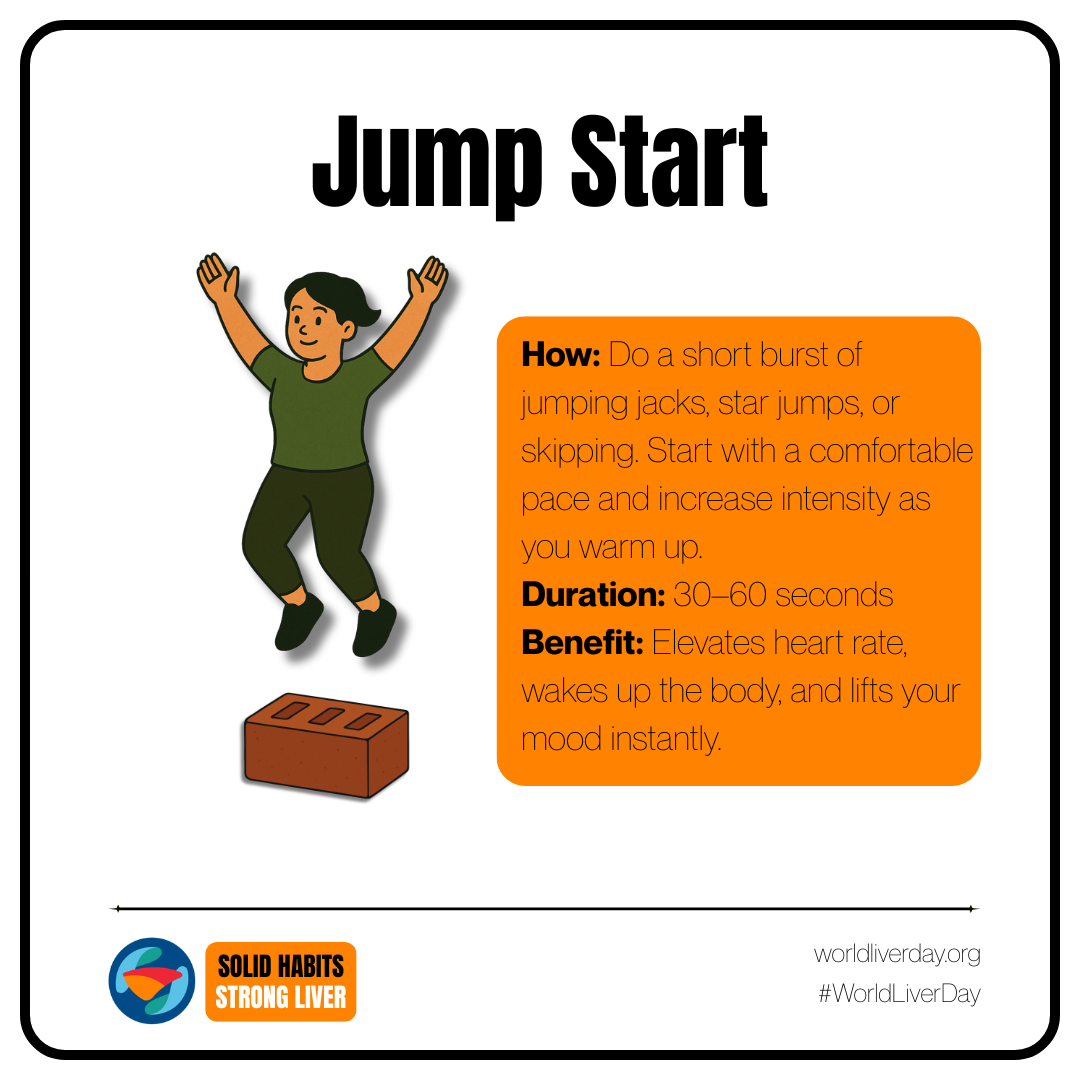
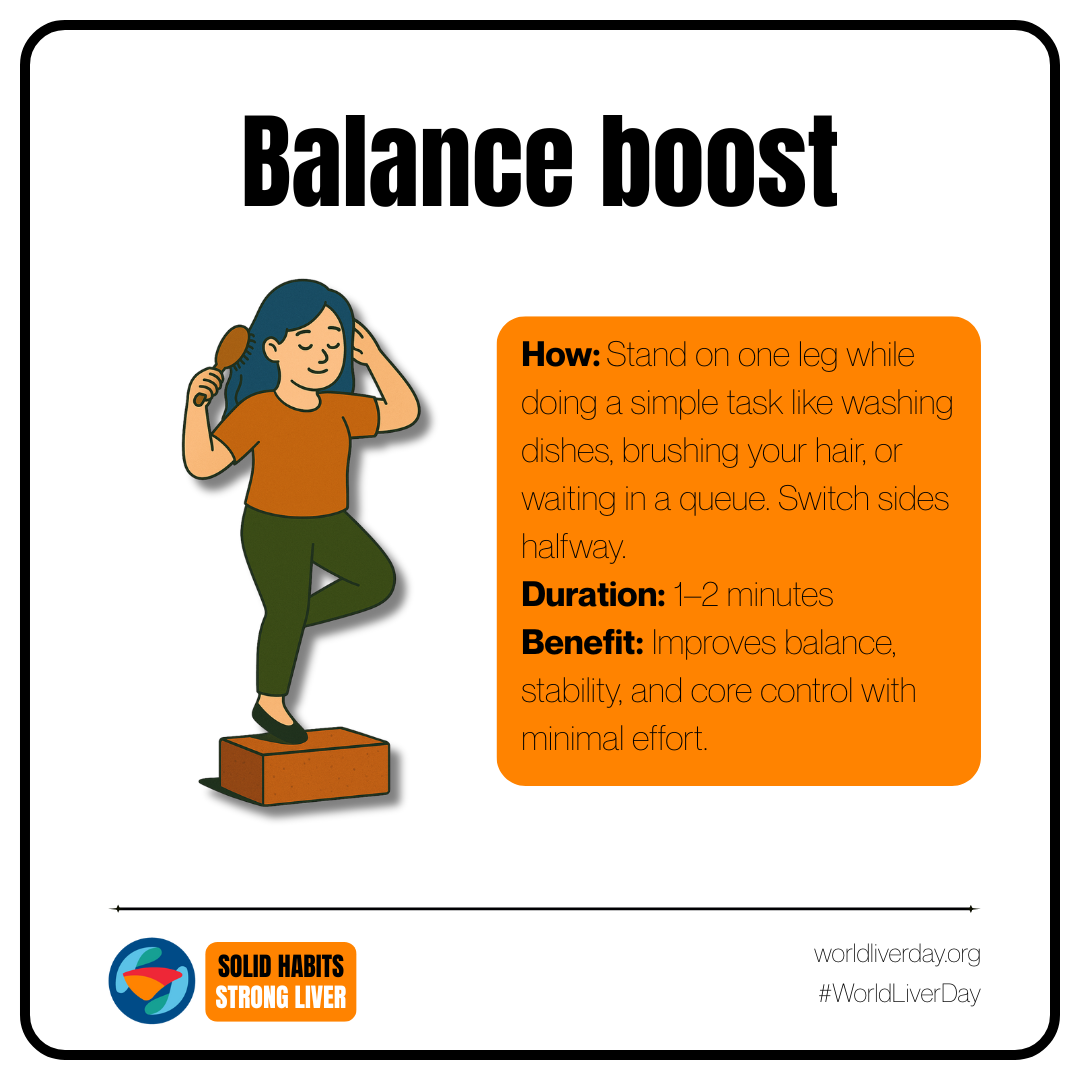
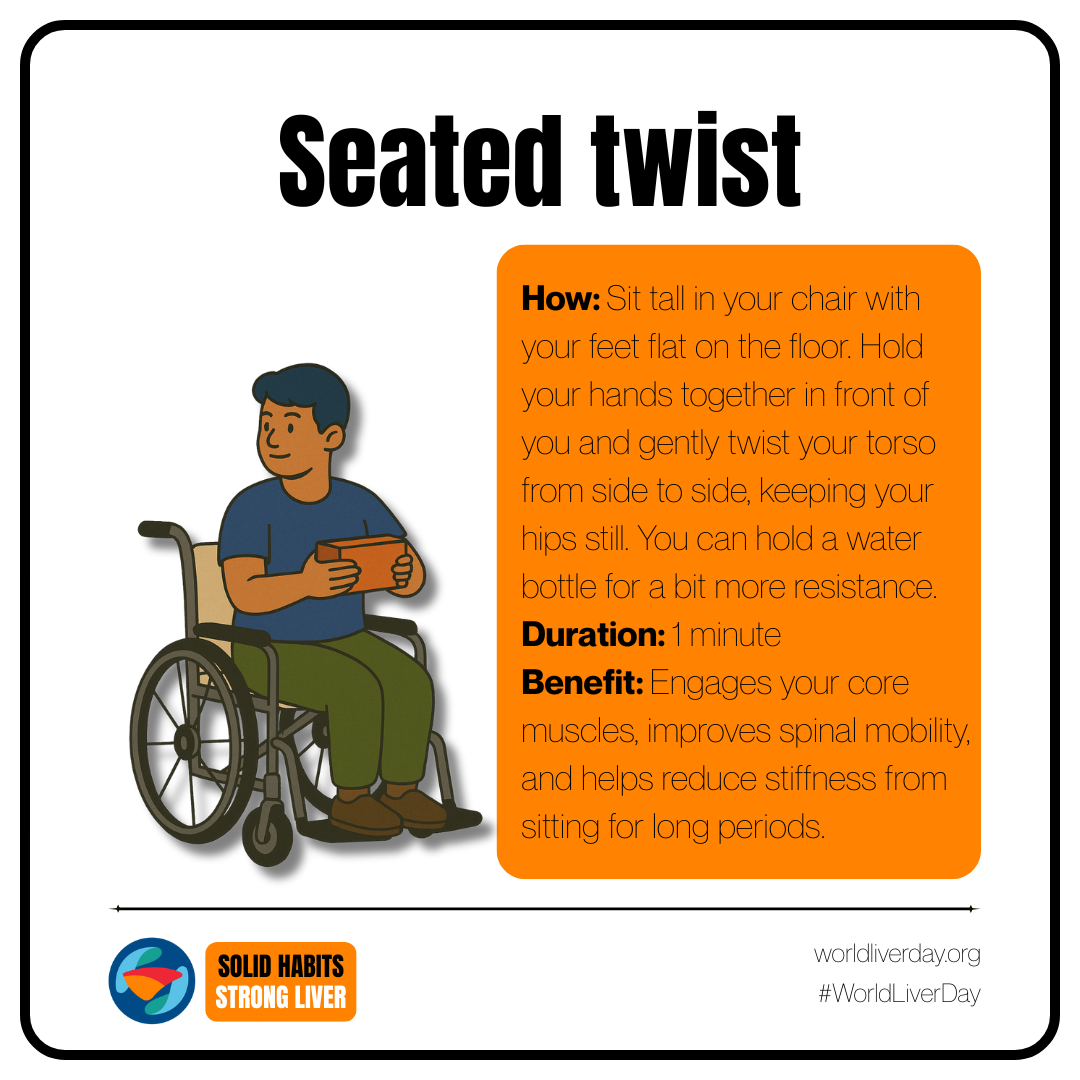
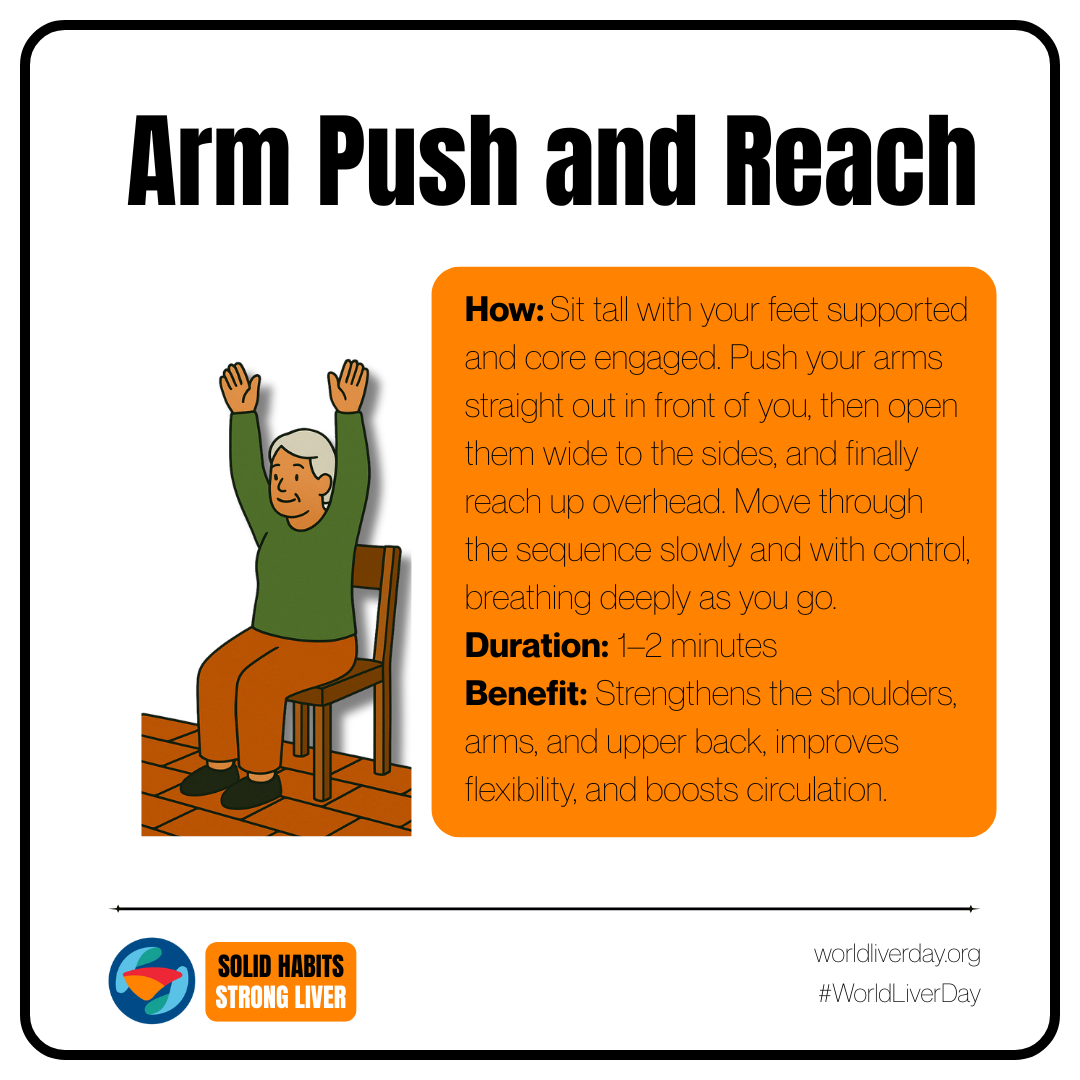
Take an exercise snack!

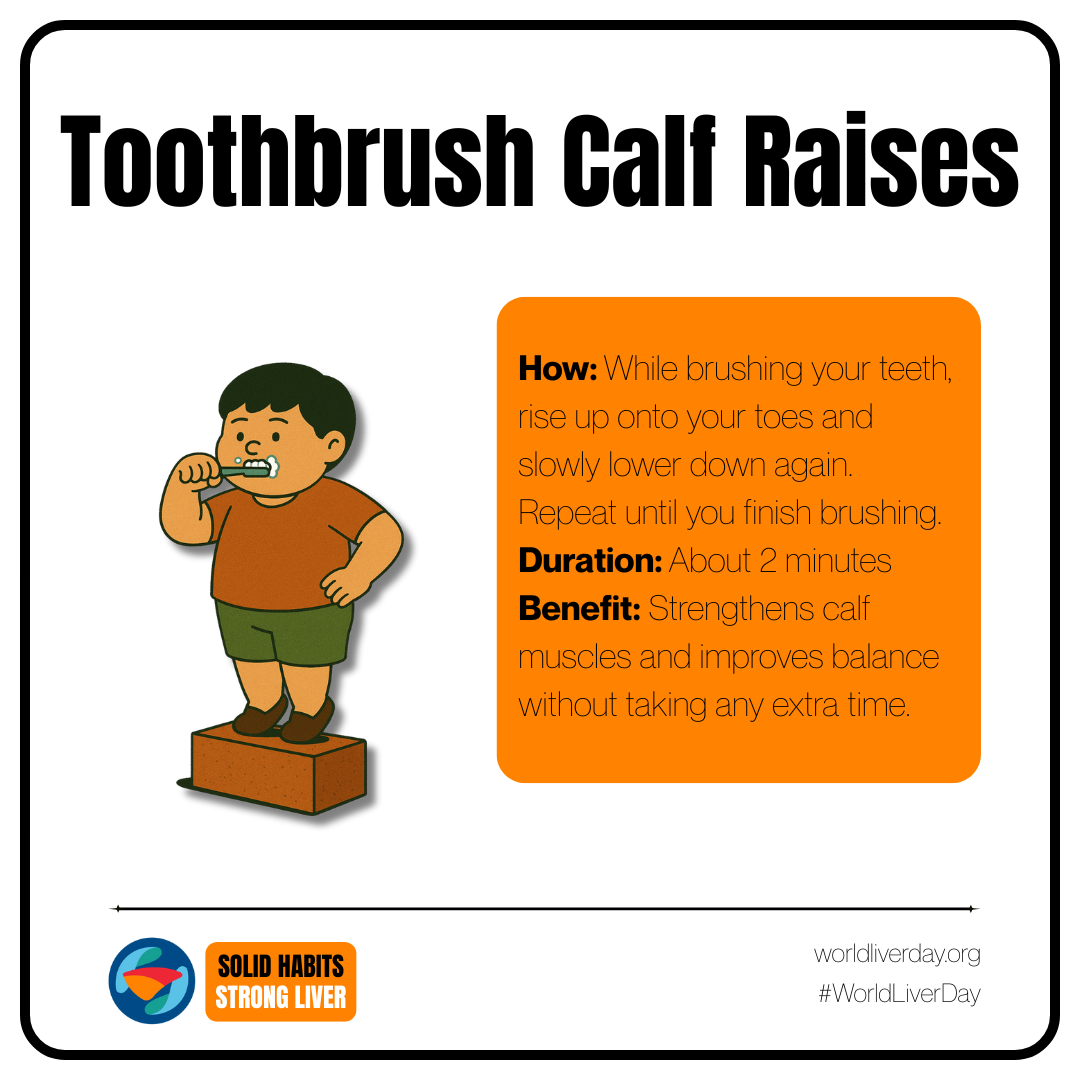
You don’t need an hour in the gym to move more. Exercise snacks are short bursts of physical activity that fit regularly easily into your day: just 30 seconds to a few minutes at a time. 

These mini moves might seem small, but they soon add up! Regular physical activity, even in bite-sized pieces, can boost your energy, improve your mood, strengthen your muscles, and support long-term health. Best of all, exercise snacks can be done anywhere, with no special equipment or cost attached!

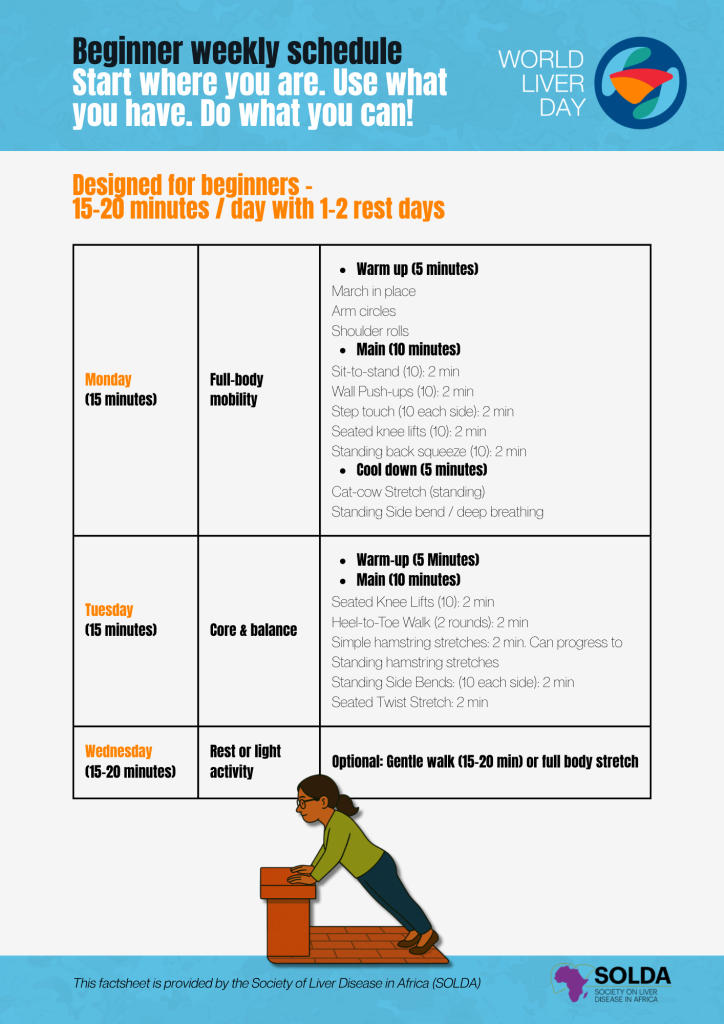
Beginner weekly schedule

Start a new week with a little bit of regular exercise. All you need is 15 minutes per day!

Resources.